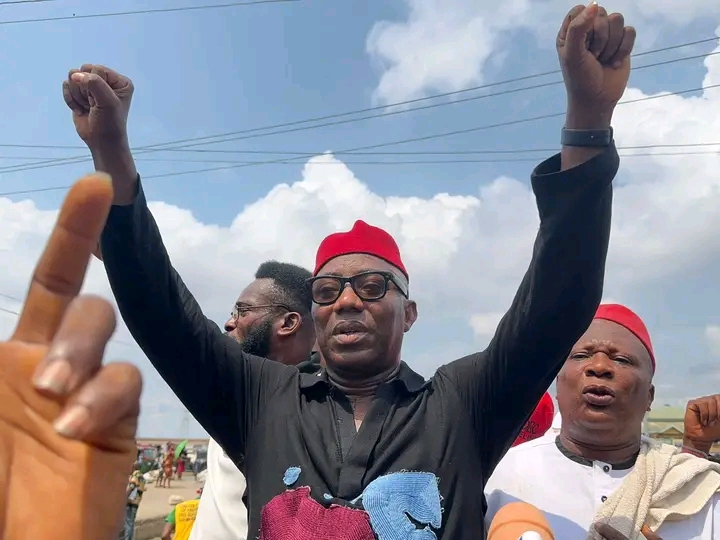
It is deeply concerning that while Omoyele Sowore continues to fight for justice and civil liberties, the Federal High Court in Abuja is threatening to revoke his bail and issue an arrest warrant over his absence at a hearing. This rigid approach by the court and the Department of State Services (DSS) risks sending the wrong message about the state of democracy in Nigeria. Sowore, who has always engaged the system with courage and transparency, is being treated punitively for participating in activism that aligns with the people’s interest.
The court’s insistence on punishing Sowore, despite clear evidence of his duly served hearing notice, ignores the broader context of his civic engagement. On the very same day he was absent from court, Sowore was in Aba, mobilising masses for the release of Nnamdi Kanu, a cause grounded in justice and fairness.
His activism is not reckless; it is consistent with his history as a defender of the Nigerian people, challenging abuses of power and fighting against government overreach. To penalise him for standing with the oppressed, while the same system has historically tolerated silence from others, is unfair and politically motivated.
Sowore’s activism highlights a painful reality: in Nigeria, the people’s champions often face legal harassment for prioritising justice over bureaucratic convenience. Instead of recognising the social and moral significance of his work, the DSS and the court appear more concerned with silencing dissent. This selective application of the law undermines public confidence in judicial independence and exposes the fragility of Nigeria’s democratic institutions.
It is important to emphasise that support for Sowore is support for rule of law, civic engagement, and fearless accountability. While the court focuses on his absence, the people see a leader who stands for the rights of the marginalized, confronts state abuse, and mobilises the masses for justice. Punishing him for activism is not only unjust; it is a warning to every Nigerian committed to speaking truth to power.
The tension here highlights a critical point about activism in Nigeria: mobilising for justice should never be treated as a crime. Democracy requires citizens to hold the state accountable, and leaders like Sowore show that courageous activism often comes at personal risk. Criminalising such efforts only weakens public faith in governance and undermines civic participation.
While the court threatened bail revocation, Sowore was actively participating in the #FreeNnamdiKanu protest in Aba. This juxtaposition underscores a truth often ignored: genuine activism cannot be silenced, even in the face of judicial intimidation. Sowore’s courage elevates him because he chooses principle over convenience, proving that leadership is measured by action and moral consistency, not mere compliance with bureaucratic expectation.
In conclusion, while the DSS and the Abuja court attempt to intimidate him, Sowore’s actions remind Nigerians that standing with justice is never optional. His Aba protest, his decades-long activism, and his willingness to challenge state overreach show that real leadership is rooted in principle. Nigerians must continue to support him because silencing him is silencing the voice of the people. Advocacy, civic engagement, and respect for democratic principles go hand in hand—and Sowore embodies that balance even when the system tries to punish it.
Leave a Reply