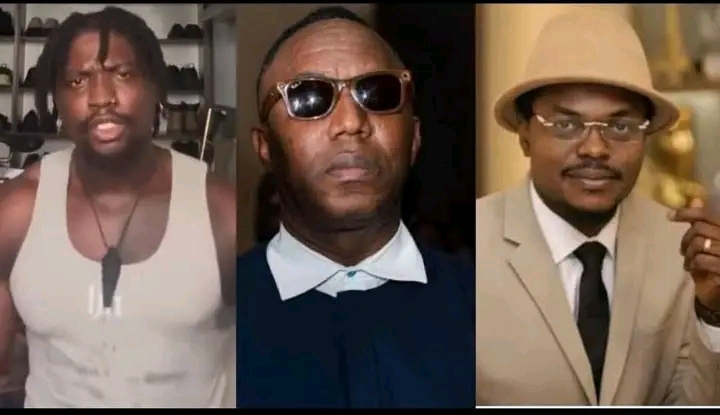
The controversy surrounding the detention of Linus Williams Ifejirika, popularly known as BLord, and the reaction that followed a statement by activist Omoyele Sowore has once again exposed how easily public debates in Nigeria can be driven by emotion rather than careful reading.
Like many others, I do not particularly like the fact that Sowore inserted himself into a dispute that has been ongoing for some time between BLord and social media commentator VeryDarkMan. However, whether one likes it or not, Sowore has never been selective with his activism. Over the years, he has spoken up for many individuals facing legal or political pressure, including people who once opposed or even attacked him. That has been a consistent part of his activism.
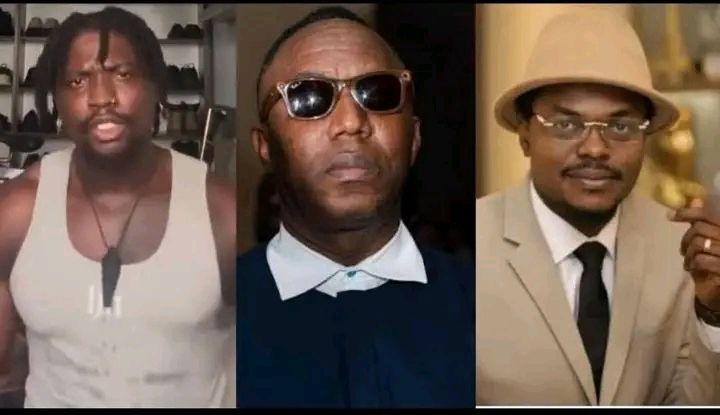
But after watching VeryDarkMan’s reaction video analyzing Sowore’s statement, I felt compelled to respond, not necessarily to defend anyone, but to address what appears to be a misrepresentation of what was actually said.
Sowore’s statement reads:
“I have read about the court-ordered detention of an individual known as B-Lord, and I must say this clearly that NO ONE SHOULD CELEBRATE THE INCARCERATION OF ANY PERSON under the color of law.
“I have reached out to my astute rights lawyer, Marshal D. F. Abubakar, URGING him to disengage from the process. We must all agree that sending B-Lord to prison is not a victory for legal brilliance or advocacy. Rather, it risks emboldening a system of oppression that weaponizes the law against citizens.
“Justice must never be reduced to punishment for its own sake. I WILL WORK TO ENSURE THIS CASE IS DISCONTINUED and B-Lord is released without further delay.”
The first thing that needs to be addressed is the line written in capital letters: “NO ONE SHOULD CELEBRATE THE INCARCERATION OF ANY PERSON.” This statement, in itself, is not controversial when viewed through the lens of human rights. The truth is simple: incarceration, especially before conviction, should never be treated as entertainment.
Being remanded in prison is not the same as being found guilty. It simply means a court has ordered that a person remain in custody pending further proceedings. Yet in Nigeria’s social media culture, detention often becomes a spectacle. People celebrate, mock, and treat imprisonment as though justice has already been concluded.
That is precisely the mindset Sowore appears to be warning against. Justice should not be reduced to public celebration of someone’s suffering. Ironically, this is where the reaction from VeryDarkMan becomes difficult to reconcile with the principle being discussed. If the argument is about justice, then celebrating someone’s imprisonment, even before the court has completed its process undermines the very idea of fairness that the justice system is meant to uphold.
Another part of the statement that has been widely misunderstood is Sowore’s use of the word “URGING.”
Words matter, especially in public statements. To urge someone is not the same as commanding them. It simply means to strongly encourage or advise. When Sowore said he had reached out to his lawyer urging him to disengage from the process, he was expressing a position, not issuing an order that automatically stops the legal process. The final decision would still lie with the lawyer and, ultimately, with the court. Presenting the word “urge” as though it meant a direct instruction to terminate the case misrepresents the meaning of the statement.
Another important part of Sowore’s comment states that sending BLord to prison is not necessarily a victory for legal brilliance or advocacy. This touches on a deeper issue within many justice systems: the difference between justice and punishment. Justice is supposed to establish truth, protect rights, and ensure fairness. Punishment is only one possible outcome of justice. When society begins to measure success simply by who ends up behind bars, the justice system risks becoming an instrument of vengeance rather than fairness.
This is not about defending BLord or dismissing the legal allegations against him. If he has broken the law, the court will determine that. But the legal process should be allowed to unfold without turning imprisonment into a trophy for public applause.
The other criticism raised by VeryDarkMan was that Sowore should have reached out privately to him like a younger brother rather than making a public statement. That argument is also difficult to sustain when examined carefully. Activism, especially the kind Sowore has practiced for years has rarely been conducted privately. Activists speak publicly precisely because they believe public scrutiny can prevent abuse of power.
The dispute between BLord and VeryDarkMan has largely played out in the public space through videos, posts, and commentary. In such circumstances, it is hardly surprising that another public figure would respond publicly.
At the heart of this entire controversy lies a deeper question: what kind of justice culture do we want to build? Do we want a society where people celebrate when someone is sent to prison, even before guilt is established? Or do we want a justice system that prioritizes fairness, due process, and restraint? These are uncomfortable questions, but they are necessary ones.
Whether one agrees with Sowore or not, the central idea in his statement is clear: justice should never become a spectacle where incarceration is treated as entertainment. The courts will ultimately determine the fate of BLord. But the way Nigerians react to situations like this reveals something about us as a society. If we continue to celebrate imprisonment rather than insist on fair justice, we risk normalizing a system where the law can easily be weaponized against anyone.
And in such a system, none of us would truly be safe.
Leave a Reply